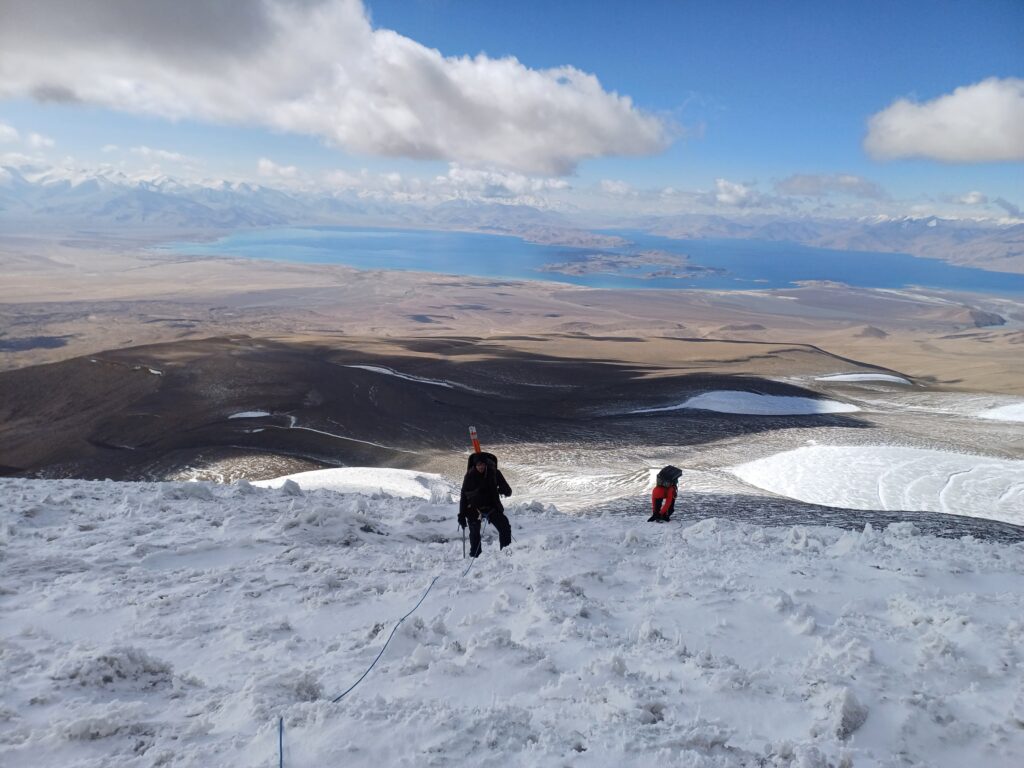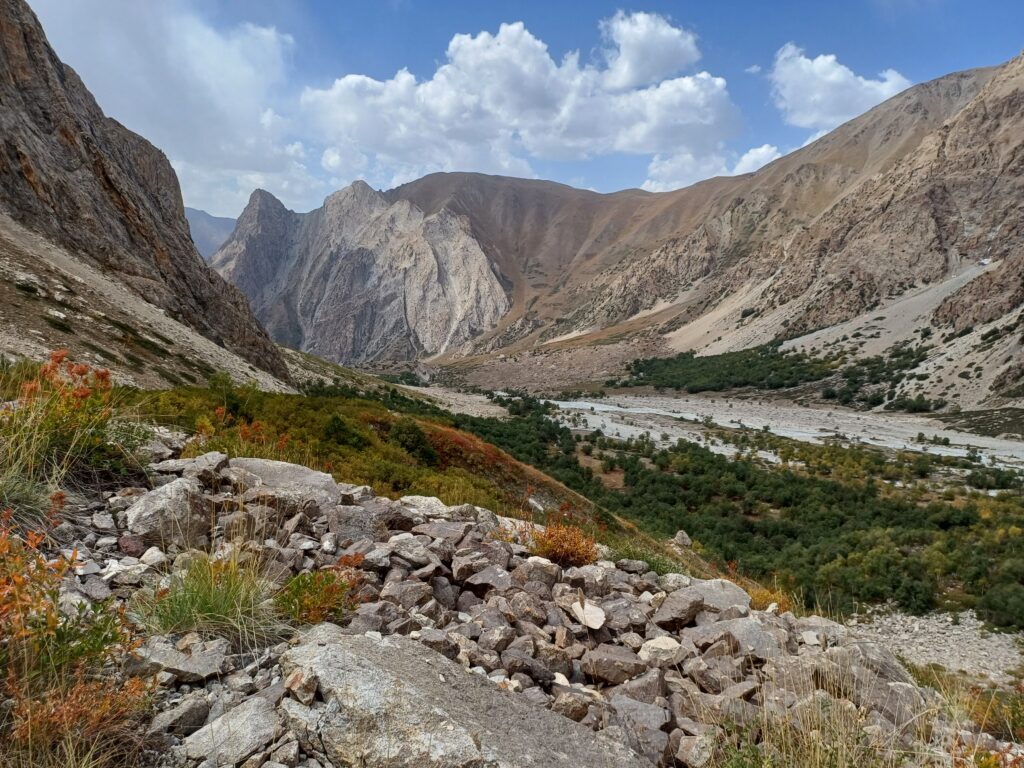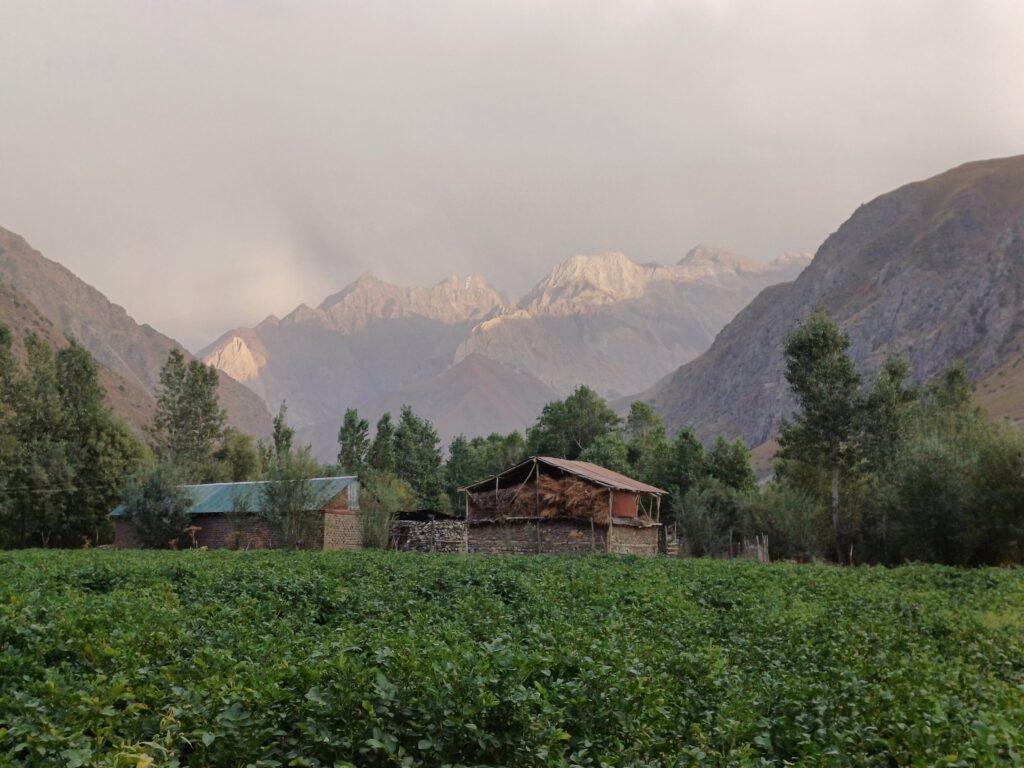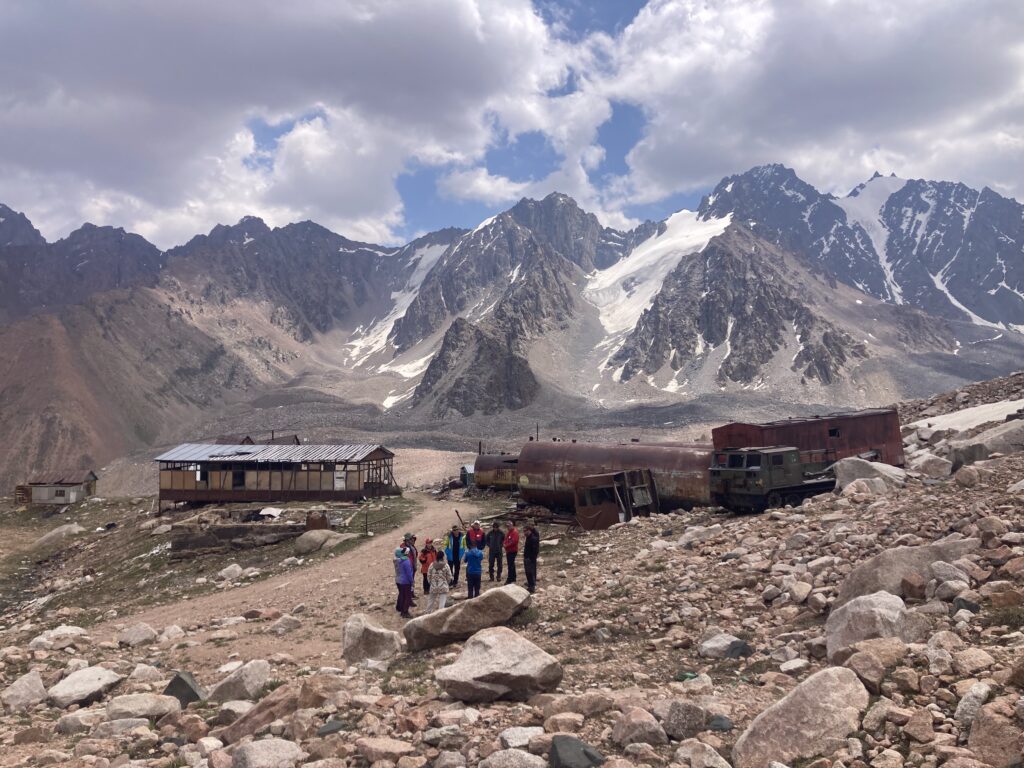
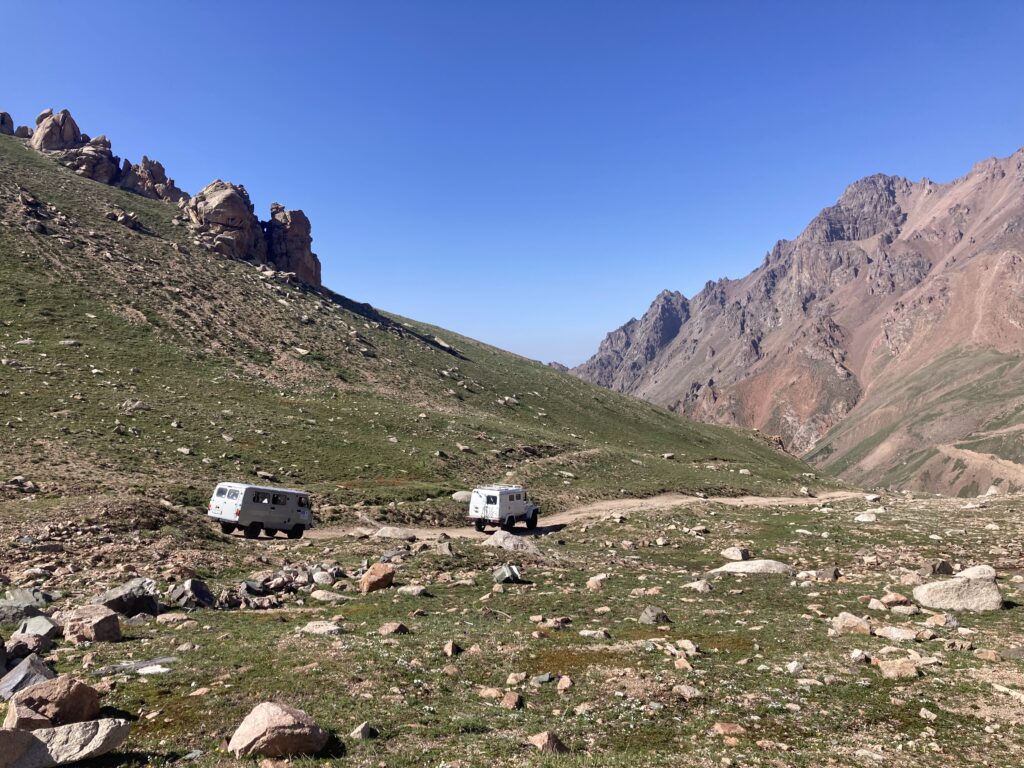
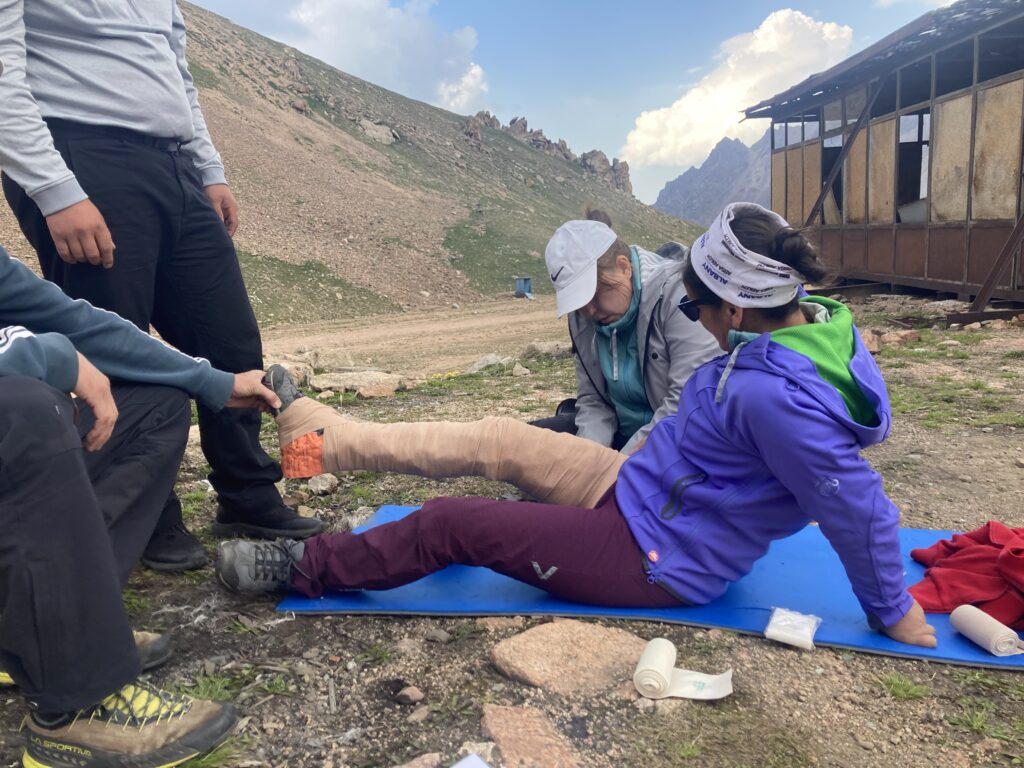
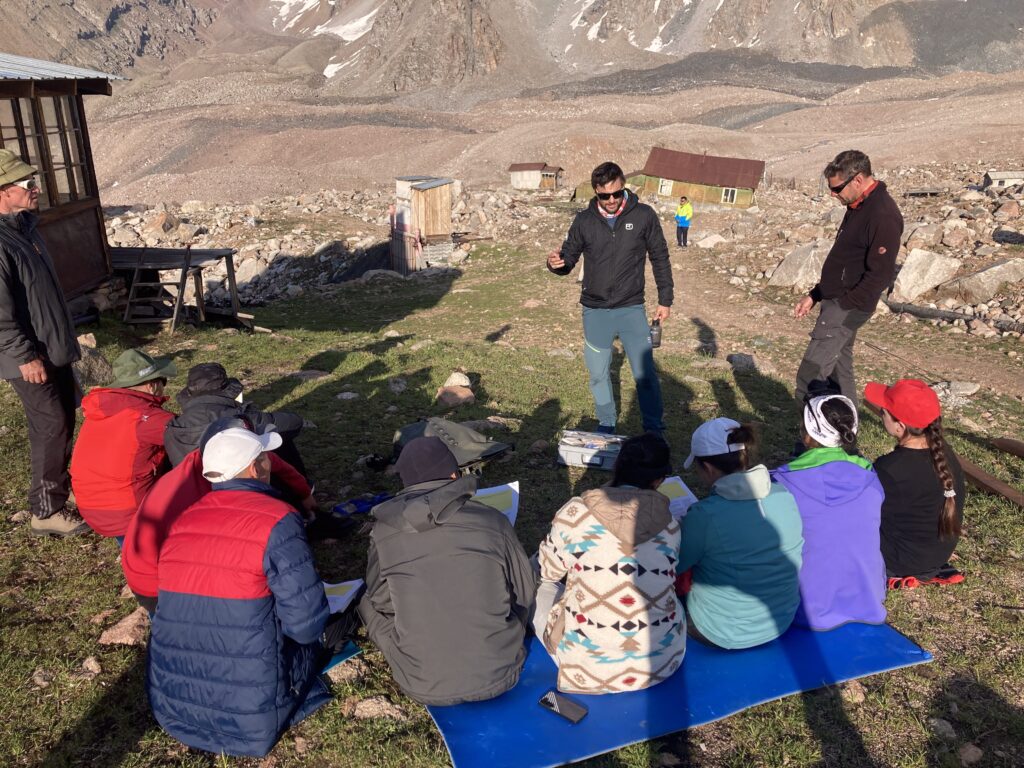
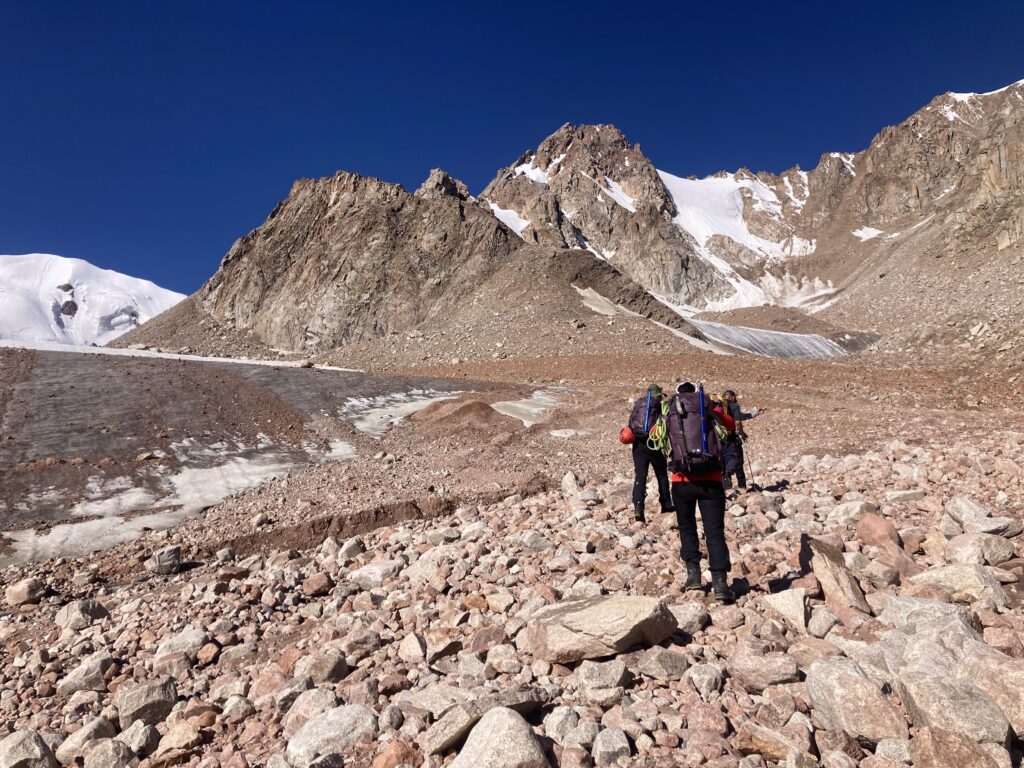
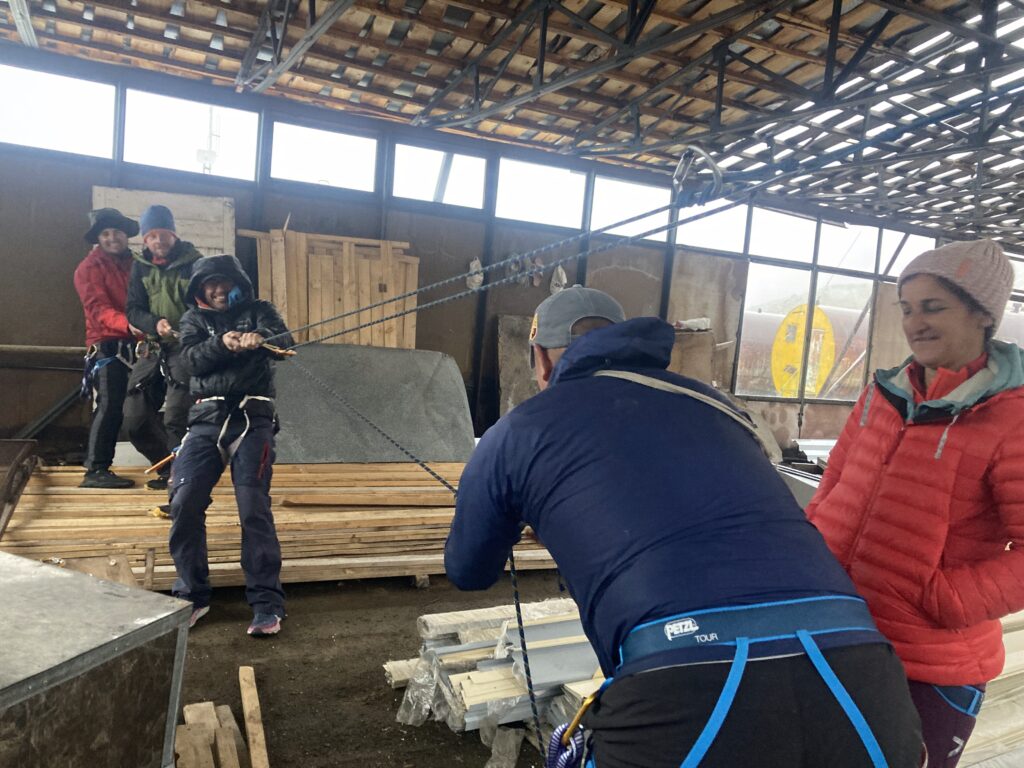
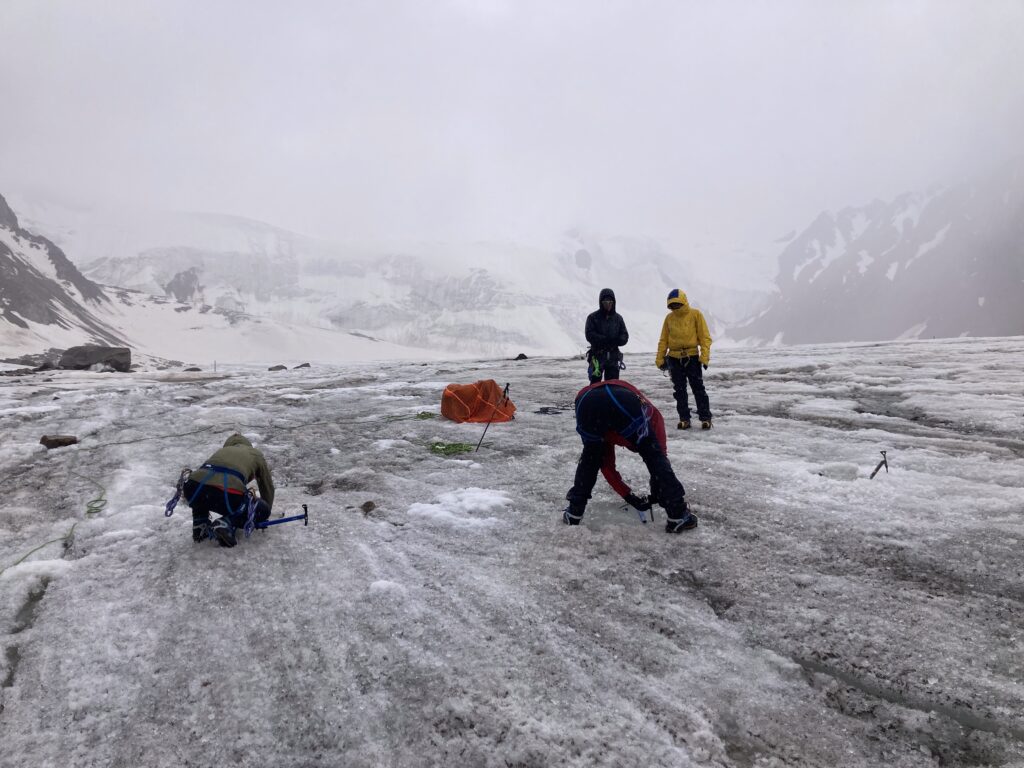
In late June 2025, PAMIR organised a 3-day ‘Health & Safety in the Field’ course followed by a 2-day ‘Technical Glacier’ training for local partners and collaborators and guides of the Adventure of Science Cantral Asia programme. The courses were tought by the Groupe d’Intervention Médicale en Montagne (GRIMM) and took place in the Tuzyuksu glacier station and on Tuyuksu glacier.
The High-Level International Conference on Glaciers’ Preservation (https://dushanbeicgp2025.com/) took place from 29 to 31 May 2025 in Dushanbe, Republic of Tajikistan, to highlight the vital role of glaciers in maintaining global ecological balance and addressing water-related challenges.
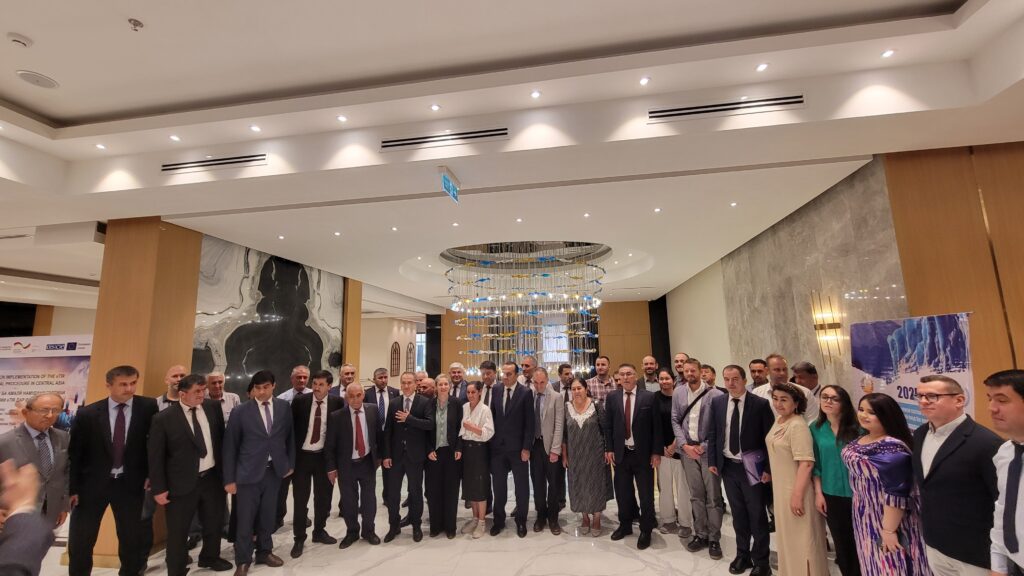
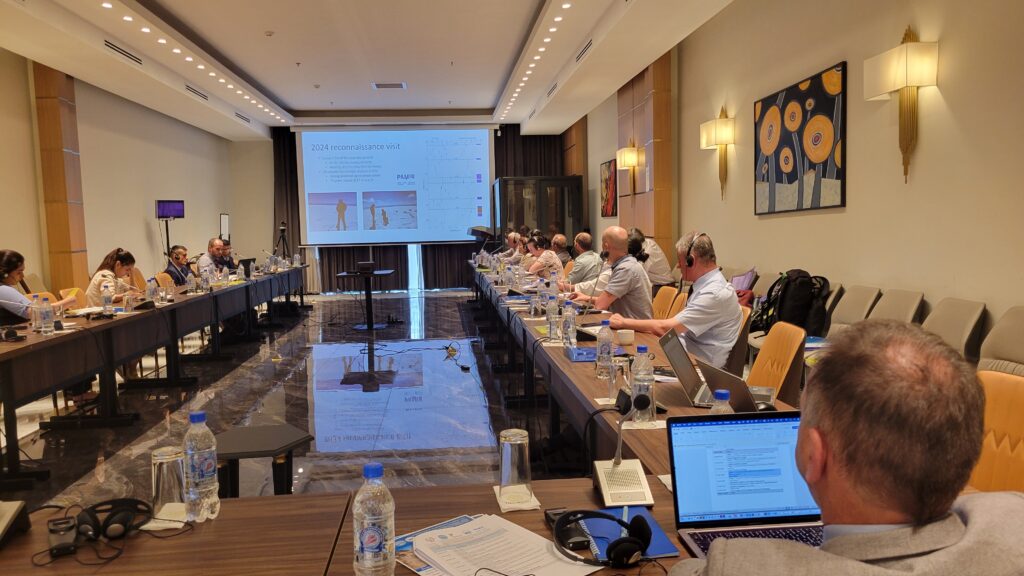
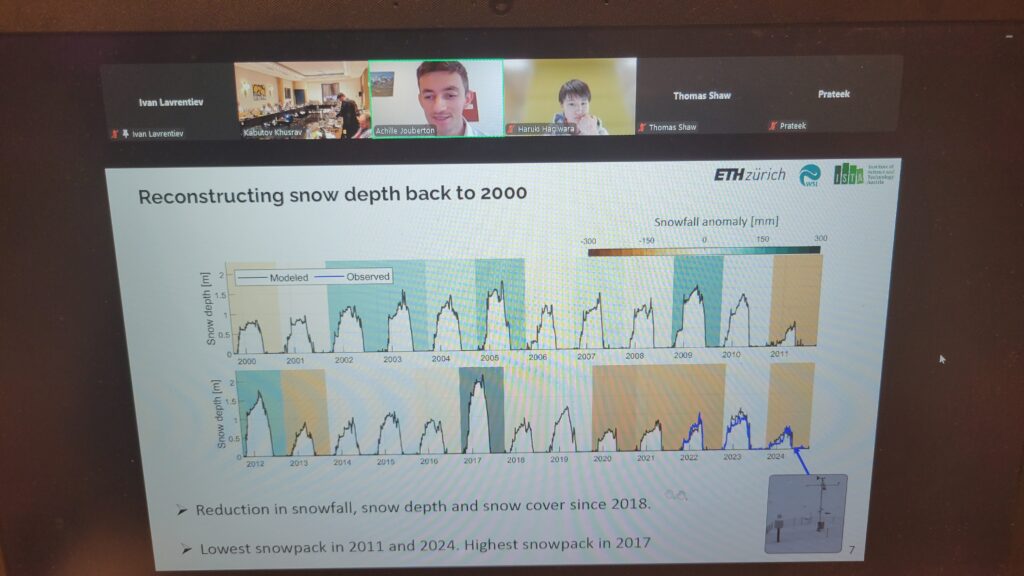
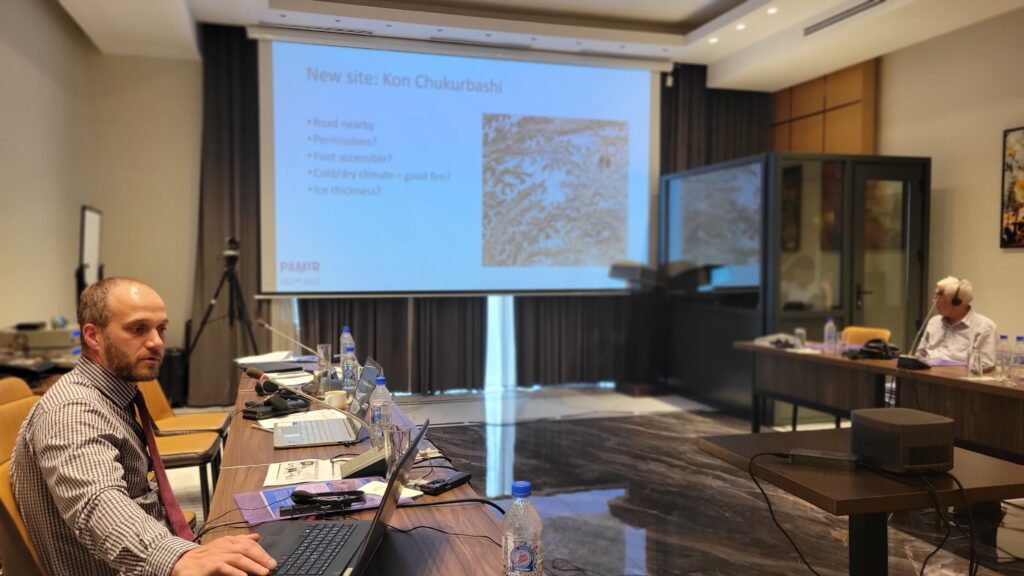
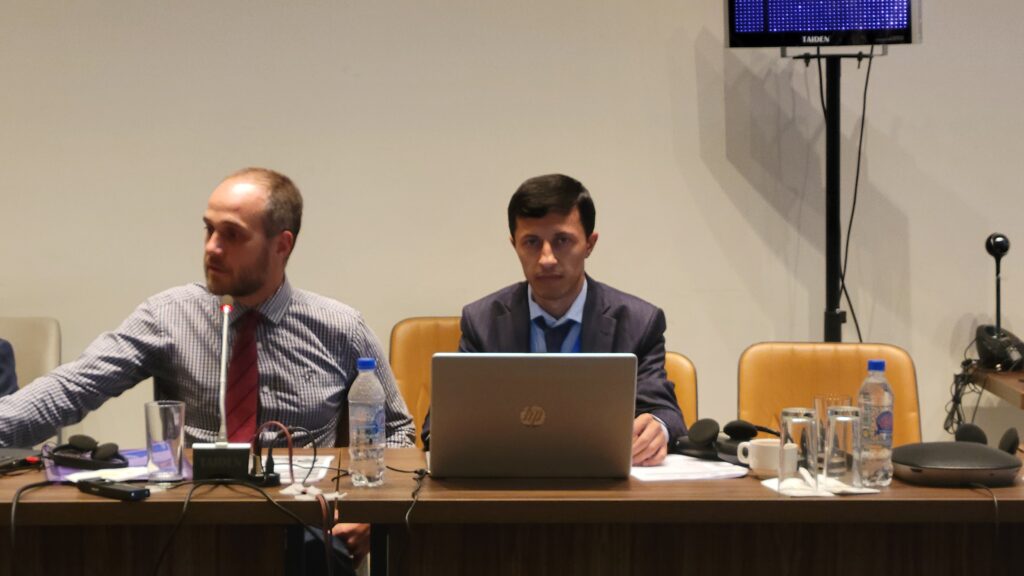
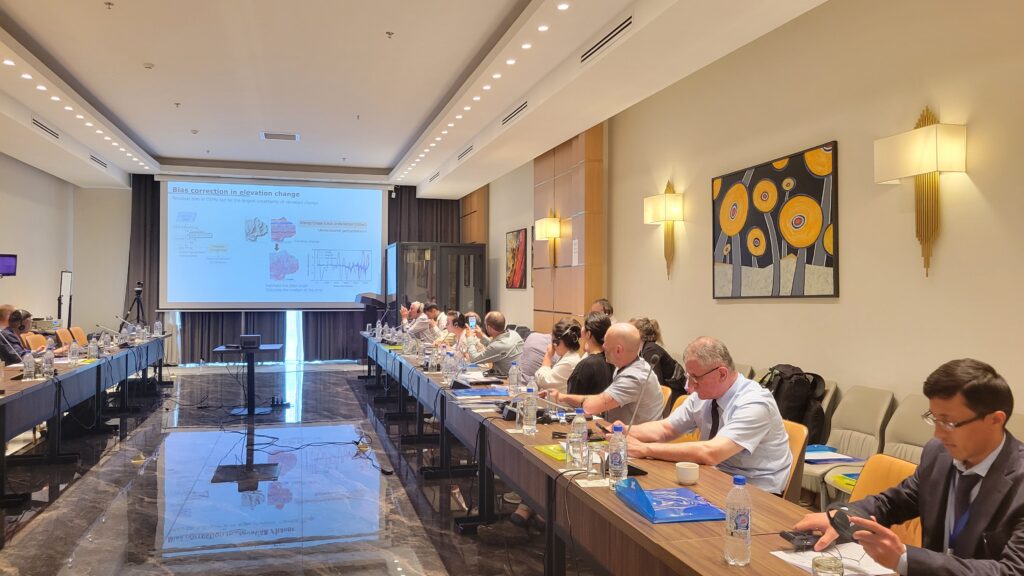
In preparation for the main conference, participants of the PAMIR Project organised a meeting on 27 May, with attendance of representatives from several Institutes of the Academy of Sciences, as well as key governmental agencies (Tajik Hydromet, Committee of Environmental Protection). The PAMIR team presented key project findings and advances to-date and outlined the major objectives for 2025.
During this high-level event, PAMIR colleagues Evan Miles, Martin Hoelzle, Martina Barandun, Tomas Saks, and Joel Fiddes presented in numerous keynotes, sessions, panels, side events and forums, as well as in the “Song of the Glacier” exhibition hosted by the SDC Swiss Cooperation Office in Dushanbe.
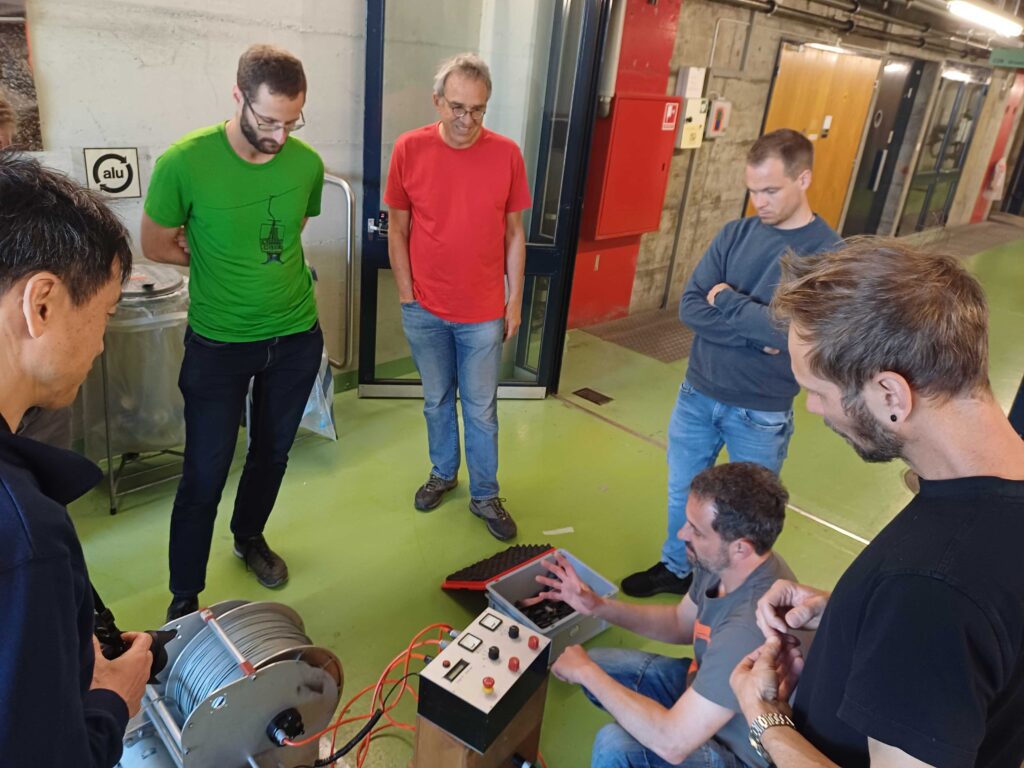
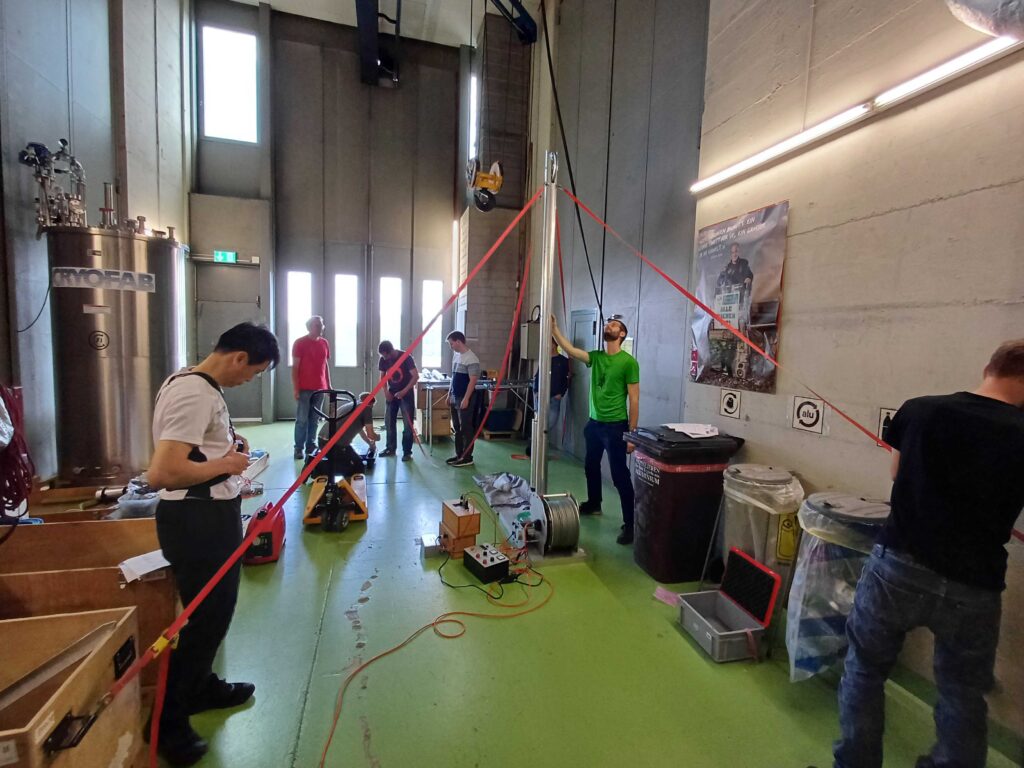
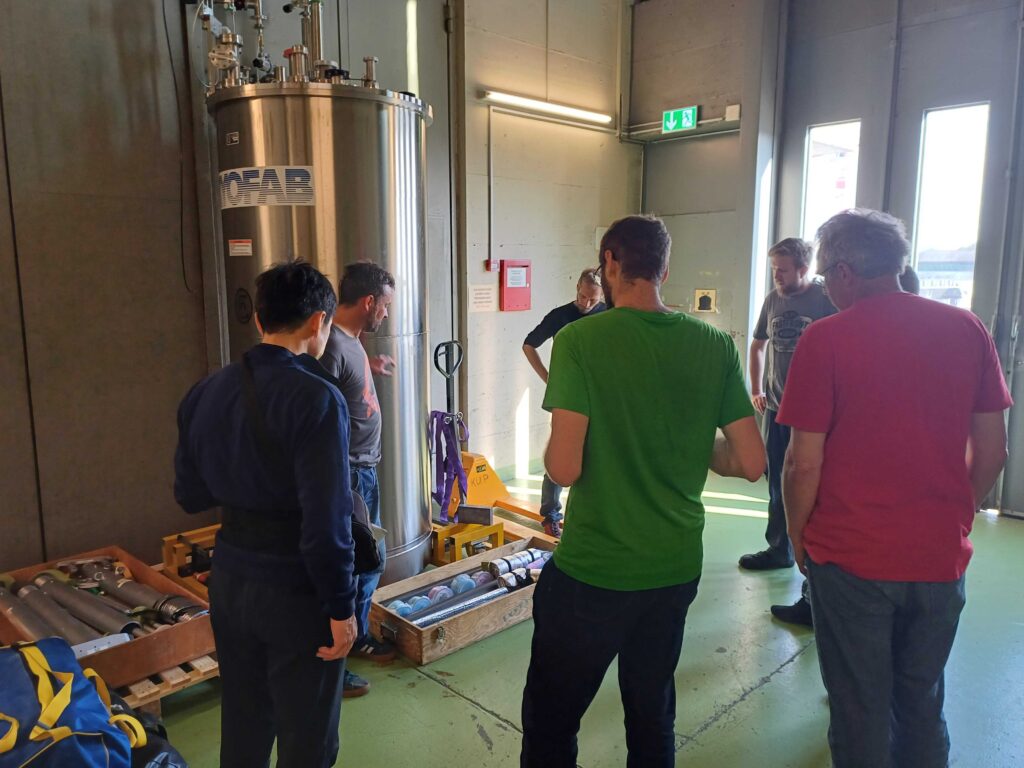
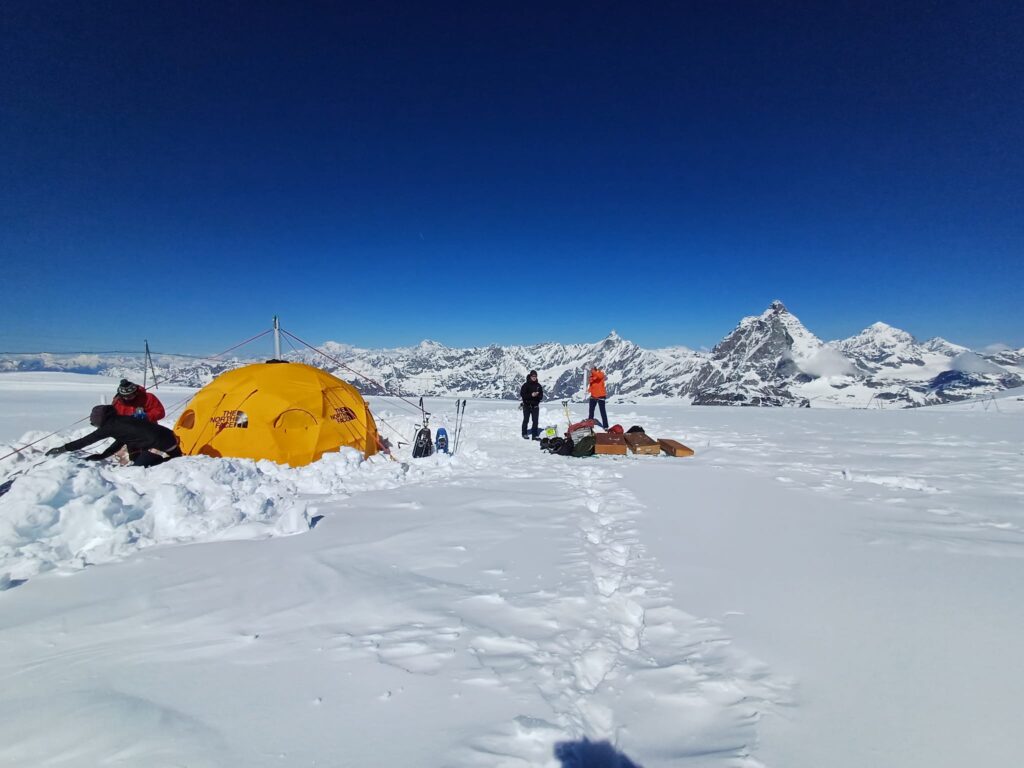
Members of the PAMIR team met for a training workshop at the University of Bern and on Breithornplateau to prepare the 2025 field season. Participants learned about operation and maintanace of the FELICS corer which will be used this summer in the Pamirs.
The PAMIR consortium is happy to support ‘Adventure of Science: Women and Glaciers in Central Asia’.
In 2025, like in previous years, an all-female team of instructors, is organizing a 10-day glaciological excursion for women (18 – 25 years old) from Central Asia who are passionate about science, nature, and art. Together, students and instructers will explore the Ala Archa National Park in Kyrgyzstan, combining scientific methods, artistic observation, and mountaineering for a great learning experience! The expedition will focus on climate and environmental changes in high mountain regions. After the expedition, two public events will connect the participants with renowned scientists and professionals in related fields: a post-expedition event in Kyrgyzstan and an international Symposium.
The bilingual English-Russian expedition is free of charge for the participants and applications for the 2025 expedition will be accepted from 1 – 31 March 2025 .
More information can be found on this flyer and on the AoS webpage , Facebook and Instagram.
On 7 November 2025 PAMIR scientists gathered in Fribourg to discuss results from previous work and present their progress and plan upcoming work.
Have a look at recent publications and read about some of this summers fieldwork on glacier lake outburst floods (GLOFs) at the Baralmos Glacier done in collaboration with the GLOFCA project.